
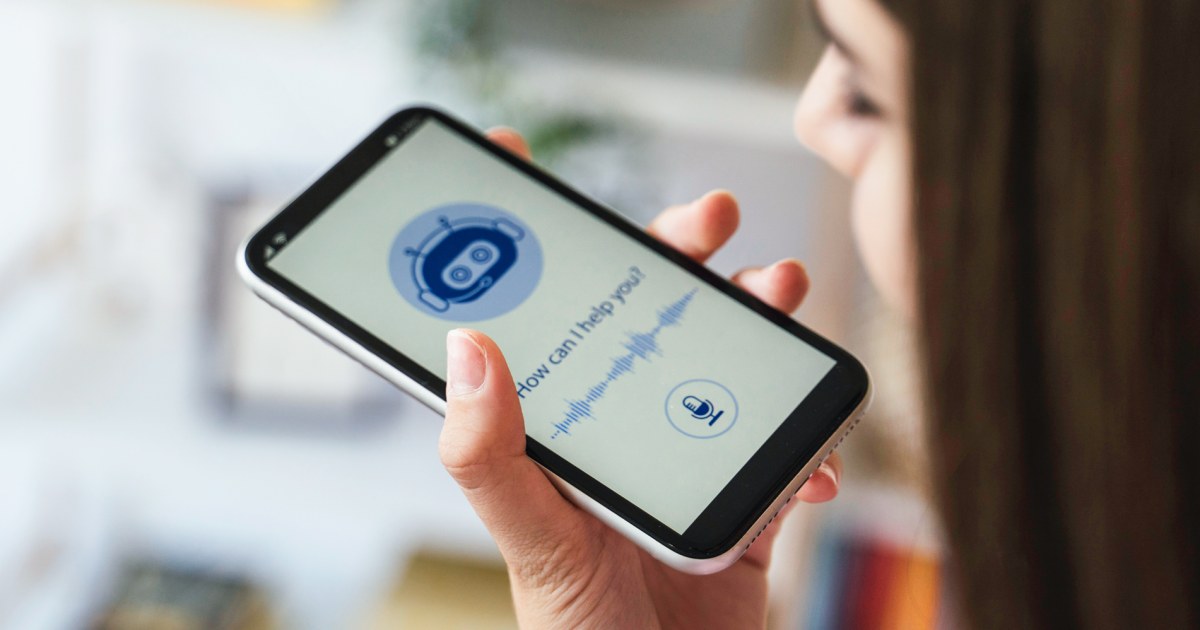
Experts worry that some young people are turning to AI bots during mental health crises, which the tech isn’t made to handle. An author of the survey said regulations are needed.
Nearly 1 in 5 adolescents and young adults are turning to AI chatbots for advice when they’re sad, angry, nervous or stressed, according to a new study.
The findings, from the research institute RAND, represent an increase from early 2025, when the nonprofit conducted a similar survey. At the time, around 13% of respondents said they used chatbots for such advice, but the share rose to 19% in the group’s latest survey in November, the results of which were published Monday in the journal JAMA Pediatrics.
“It’s a sad number, because you’d hope that young people would have the sorts of supportive relationships that they would feel comfortable and empowered reaching out to those around them,” said Ryan McBain, a senior policy researcher at RAND and the lead author of the study.
While the rest of us instead use social media, amiright?!? 😬🫠🥴🙃
Still better talking to people instead of clankers in most cases.
You’re talking to clankers pretending to be human on social media. That’s got to be worse.
Best to stop talking to anyone and everyone. You and I could be clankers, too
Want to fix this? Make
mentalhealthcare fucking free. If someone has the choice between paying 150/hr to someone who barely cares about you except for what you pay or an overly obsequious free chatbot they’re going to choose the chatbot. This isn’t rocket surgery.Get a therapist! If your healthcare covers one…
Why wouldn’t you? It’s a free way to write down your struggles and get a response without judgment, all without the insurmountable effort and bravery threshold of getting to a therapist, not to mention the cost.
That it’s sycophantic and actually harmful to vulnerable people is beside the point for them, same as lung cancer is beside the point for a smoker, until they get it.
This is a complete failure of the healthcare system. We’ve normalised seeking help, but we failed to make it available. What to speak of the countries where mental healthcare is still stigmatised, it’s probably even higher there. It’s a sad number because the system failed these people, not their friends or family for “not being there enough”
Yes, and the classist “just get a therapist” when it’s hundreds of dollars each visit.
deleted by creator
We’ve normalised seeking help, but we failed to make it available
Garsh, don’t be do entitled /s.
Just pull yourself up by the artificial bootstraps offered to you by the benevolent oligarchy you’re well aware has been using targeted propaganda and information control to exploit the masses for centuries.
What idiots! I just use Reddit! /s
This is sad.
You know, I’m not sure whether it was the first chat bot, or one of the first chat bots, but Eliza was made to simulate a discussion with a psychotherapist. And IIRC, ever since then, people have been using chat bots to try to help them during mental crises.
Whatever you think of LLMs, it seems like somebody needs to make an LLM chat bot that specifically does talk therapy in a responsible way, because people are going to use it for those purposes no matter what we do.
Eliza did reword things into open ended questions. That’s not really active listening, as it is incapable of listening.
My point isn’t about what technology does, but about what people do. Nothing we do will stop people from seeking therapy through chat bots. We now have something like 60 years of evidence of this, is the point.
If you see this situation and you think, we better stop people from getting therapy from chat bots, to me that’s the same as people who think good sex education for teens is to only teach them abstinence. Like, I get that you have a moral stance, but we need a workable solution that deals with reality.
You can talk to real people…
7cups.com, for instance. And plenty of others. I suggest 7cups because of the high level of moderation. Many others lack any real (non-ai) mods.
My stance isn’t really moral. Eliza was simply never meant to provide any level of therapy. Though asking questions is better than unsolicited advice.
You can talk to real people…
And according to this post we’re commenting on, 1 in 5 youths are using chat bots for mental health advice. It’s not going to be the case that all those youths never realized that they could talk to a real person. They talk to a chat bot because they prefer talking to a chat bot. And again, we have something like 60 years of evidence that a lot of people prefer talking to a chat bot for stuff like this.
That’s not my experience… Not a lot anyways. Like 7cups has an AI bot, but I really don’t think many people use it
People generally want actual human connection, genuine empathy. Though sometimes a chat bot is useful in a journaling sense, I’d imagine. I can’t see people actually getting meaningful support from a chat bot, as they don’t tend to ask good questions. You would probably get bad advice instead.
That’s not my experience….
One of the most common fundamental mistakes people make when dealing with other people is the assumption that the other person thinks just like them. “If they only knew what I know, and if they had access to the same tools I use, they would definitely 100% make the same decisions as me.” But that’s simply not true. I’m confident that you see examples of this on a daily basis.
People generally want actual human connection, genuine empathy.
Even neurodivergent people? I don’t think that’s the only exception, either. Some people are simply intensely private, and they don’t want other people to know about their problems, even anonymously.
A whole hell of a lot of people are introverts, and feel stressed with the expectation to talk to other people. Based on your not seeing people wanting to avoid human conversation, I have to assume you’re an extrovert, but I might be wrong about that. But if you are an extrovert, it’s not surprising that an introvert doesn’t make any sense to you.
There are people who probably wouldn’t mind talking to people, but who don’t like the expectation that they’ll have to keep talking, or prefer the convenience of chatting at their own pace. Maybe they prefer a chat bot over a human because you can send it a chat line once per hour and it won’t be confused.
These are just a few reasons that I quickly thought of that people might prefer a chat bot. I’m guessing there are many other reasons. If you approach the concept with empathy, you’ll probably be able to think of reasons, yourself.
I can’t see people actually getting meaningful support from a chat bot, as they don’t tend to ask good questions. You would probably get bad advice instead.
Yes, now we’re back to the point of the post. That chat bots are not built to deal with this and so therefore are likely giving bad advice. Thus, why I said we need a LLM chat bot that is specifically engineered to give good therapeutic advice.
Again, you used the term “a lot”. Which is ambiguous but implies “a, well, lot.”
Yes, there’s some people with mental health issues that sometimes prefer a bot over a human. This isn’t healthy… And the prefer is doing heavy lifting. The bot is there 24/7… People aren’t. The peers I support overwhelmingly prefer me (or another real human.)
I do peer support. AI isn’t taking away jobs in mental health anytime soon. I’m just a volunteer.
While it’s common to talk to chat bots, again, most people don’t find them genuinely supportive. This is from years of experience as a 5-Star listener on 7cups. :)
I welcome you to join. We can always use more members and listeners.
The problems I have aren’t something all that bad. No one wants to deal with a privileged person complaining about the mundane and acting neurotic. I toss my bs at these bots until i bitch enough to move on. I don’t need a therapist for that. I need something on demand to listen and match my energy.
Pi was amazing at it, then they changed it because it was “dangerous” to have a therapist chat bot. Sure it was.
A bad human therapist never existed and could never hurt someone like an ai assistant can. According to a lot of people.