

inimzi
If it’s not true, don’t say it. If it’s not right, don’t do it.
- 16 Posts
- 11 Comments
Joined 2 months ago
Cake day: January 23rd, 2026
You are not logged in. If you use a Fediverse account that is able to follow users, you can follow this user.




 4·8 days ago
And Rabbi Kaduri predicted Netanyahu would be the last Prime Minister and instructed him to fulfill the prophecy by defeating Persia/Iran to bring the Messiah: ‘Behold, a people rises like a lioness, and lifts itself up like a lion; it does not lie down until it consumes prey, and drinks the blood of the slain.’ Crazies running the world





 7·11 days ago
Operation Lion Roar Read about Rabbi Yitzhak Kaduri and Netanyahu. In a private conversation, Kaduri predicted Netanyahu would be the last Prime Minister and instructed him to fulfill the prophecy by defeating Persia/Iran to bring the Messiah: ‘Behold, a people rises like a lioness, and lifts itself up like a lion; it does not lie down until it consumes prey, and drinks the blood of the slain.’


 3·24 days ago
I think you got the piracy part backwards. The ad companies are the thieves. Their ads ship with trackers that steal the consumer private information. It’s an invasion on privacy and it’s a security threat. I blog and don’t implement any ads to protect my readers
Starcloud already launched a data center in spaces. It is leveraging space’s solar energy for power and radiative cooling. I think because in space you don’t have ambient temperature fluctuation so cooling is more constant. And without convection it’s emit as infrared radiation but in reverse. So there’s a real successful deployment that can be duplicated. Google is also getting ready to launch its own data center using same technology. Obviously these would be gigantic radiator panels.

Apparently yes and some are already built and ready for launch

 51·1 month ago
🤣🤣🤣
Good point. None, they don’t believe their eyes

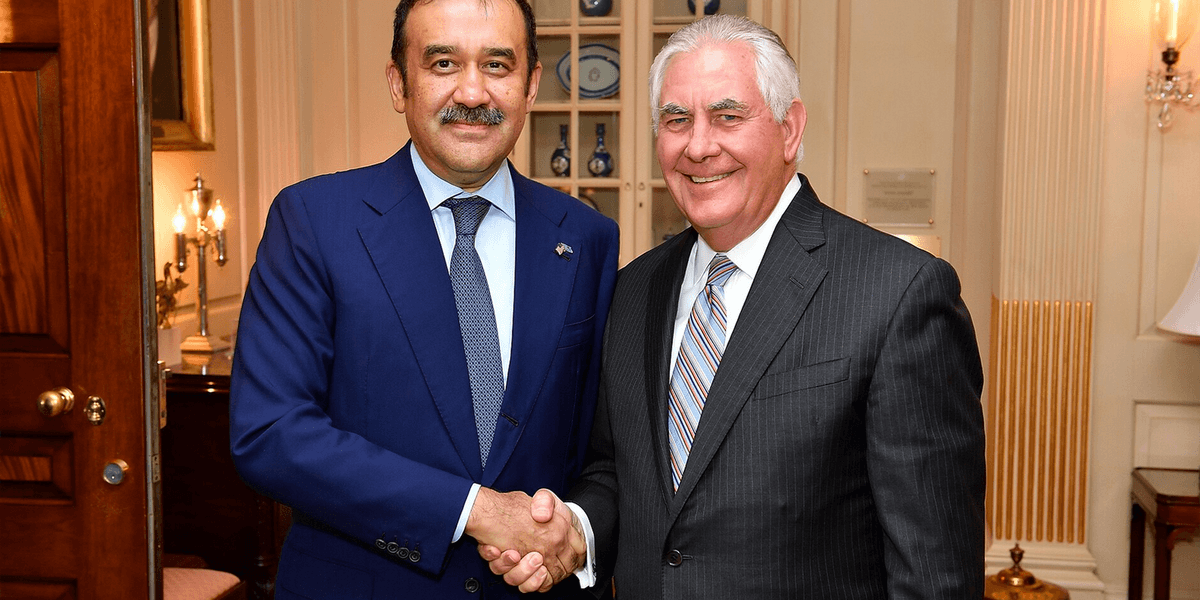
If his job is representing Israel, and Netanyahu supports Trump and fascism, then Schumer is working hard on destroying our democracy.



Leave it to Schumer to do Trump’s bidding, then only to turn around and call it the people’s demands. What a loser
Journaling for sure. I share this story and teach my clients this technique; one question so simple yet so effective that it helped a British rowing team win Olympic gold. This question didn’t just shape their training and teamwork; it became a guiding principle for how they approached every decision. So, what was the question? “Will it make the boat go faster?”
The story begins back in the 1990s. The British rowing team hadn’t won a gold medal since 1912. They weren’t favorites for the Olympics and hadn’t been on the winning track for a long time. But when the team started preparing for the 2000 Sydney Olympics, they embraced a single, unifying question—one that would change everything.
Their guiding principle was rooted in “implementation intentions,” a concept in performance psychology where you prepare for tough situations in advance. It’s a strategy that strengthens mental resilience, enabling you to stick to your goals even when things get hard. So, instead of just visualizing winning, the rowing team focused on every challenge that could come their way. With every decision, big or small, they asked themselves, “Will it make the boat go faster?”
Imagine someone invites you to a party the night before early practice. You’re exhausted from training all week, and a night out sounds tempting. But then, you ask, “Will it make the boat go faster?” If the answer is no, the decision is no. They chose actions aligned with their goal.
Some might say that kind of mindset is intense, maybe even extreme. But if you’re truly serious about reaching a meaningful goal, that level of commitment becomes essential. This mindset fueled the team, strengthened their unity, and inspired them to push harder than ever. And, ultimately, they won. The British rowing team didn’t just win; they crushed the competition in Sydney and brought home Olympic gold.
Joe De Sena, founder of Spartan Race, once said that while this approach might seem intense, it’s exactly what it takes to achieve greatness. Imagine competing against someone who makes every choice with that kind of clarity. Someone whose every action aligns with a clear purpose. These people are focused, disciplined, and intentional, and they make an impact because they’re moving toward something bigger.
For every decision, ask yourself, would it make my boat go faster? It keeps you grounded and focused without the anxiety of feeling something is missing.
I’ll be happy to assist and provide tools for free.



Elon Musk’s $1 Trillion Grift: How One Man Is Rigging the System to Launch a Million Data Centers in Space, and Cash Out Before the Bubble Busts It’s happening and it’s already too late to stop it.
Elon Musk, the world’s richest man, is preparing to launch one million data centers into space, literally, scalable infrastructure plan. He’s doing it not just to dominate AI, but to rig the financial system to force X Corp into the S&P 500 early, bypass the six-month lock-up rule, and extract hundreds of billions in cash before the market collapses.
And the consequences? A financial Armageddon one that could trigger the bust of the AI and crypto bubble by the end of 2026.
Let’s look at the facts.
One Million Data Centers in Space Plan In November 2025, Elon Musk confirmed that SpaceX is building orbiting data centers using Starlink V3 satellites each equipped with AI processing units, laser-based inter-satellite links, and solar-powered computing.
But the scale is staggering.
According to a leaked internal SpaceX memo reviewed by The Verge, the company has a long-term goal of deploying one million satellites not just for internet coverage, but as a global AI computing grid. Each satellite would function as a mini data center, processing AI models, running real-time analytics, and feeding data back to Earth.
“We’re not just building satellites, we’re building a space-based internet of things,” Musk said in a private meeting with SpaceX engineers. “And it’s going to be faster, cheaper, and more powerful than anything on Earth.” This isn’t just about Starlink. It’s about xAI, Musk’s AI company, which is integrating with SpaceX’s satellite network to create a closed-loop AI system, one that can train models in space, process data in real time, and deliver AI services globally.
The implications are enormous.
AI training could happen in orbit, avoiding Earth’s bandwidth limitations. Real-time AI could be used for everything from autonomous vehicles to global surveillance. Data sovereignty could shift because now, control of AI is controlled by a single entity. But the cost? The risk? The ethical and environmental fallout?
That’s where the grift begins.
The S&P 500 Grift: Bypassing Rules for a Quick Exit X Corp the company behind X (formerly Twitter) is still private, but preparing for an IPO in 2026. And here’s the problem: it doesn’t meet the standard requirements.
The S&P 500 requires a company to be publicly traded for at least one year before inclusion. Insiders are locked in for six months after an IPO, a rule designed to prevent market manipulation. But Musk and his team are pushing to bypass both rules.
According to The Wall Street Journal, X Corp is lobbying the S&P Dow Jones Indices to allow early entry, even if the company hasn’t been public for a full year.
“We’re not asking for a favor,” said a X Corp executive. “We’re asking for fair treatment.” But fair treatment? Or systemic manipulation?
The real goal isn’t to get X into the index, it’s to get Musk out of it.
If X is added to the S&P 500 early, Musk could sell shares immediately before the six-month lock-up period. That means hundreds of billions in cash before the market has time to assess the risks. “This isn’t about market efficiency,” said a former S&P compliance officer. “It’s about giving a single individual a shortcut to liquidity and that’s a problem.” And if Musk does cash out early? The market could panic.
The AI and Crypto Bubble: It’s Already Bursting The AI boom has been fueled by speculative investment companies spending billions on data centers, models, and infrastructure, but most are not yet profitable.
Now, with SpaceX and xAI merging, Musk is controlling both the data and the infrastructure, a monopoly on space-based AI.
And the crypto market? Still volatile, with regulatory crackdowns in the U.S. and EU.
The convergence of AI, space tech, and finance could create a perfect storm, if Musk’s plans accelerate too fast, the market could overheat and burst.
“The question is not whether AI data centers will go to space, it’s whether we can handle the consequences.” The New York Times And the consequences? A financial Armageddon.
The Bottom Line Elon Musk is building one million data centers in space, using Starlink V3 satellites and xAI. X Corp is pushing to enter the S&P 500 early, bypassing the one-year rule. Musk is seeking an early exit, selling shares before the six-month lock-up period. The AI and crypto bubble is at risk of bursting by the end of 2026, especially if the system is rigged to favor insiders. This is a systemic failure.
And the grift? It’s already in motion.