

5·
11 months agoThis is how I’ve always used hardware. Y’all out here buying up new parts each year they release?!?
It’s like iPhone crowd energy, but for PC parts I suppose.
This is how I’ve always used hardware. Y’all out here buying up new parts each year they release?!?
It’s like iPhone crowd energy, but for PC parts I suppose.
Good news, they have these, and you even get paid to do it!
Not nearly enough mind you.
Multi-cloud is a significant amount of effort to pull off.
Being on one cloud provider across multiple regions is often plenty of redundancy.
Being available across multiple cloud providers is really REALLY difficult

Except in countries with actual consumer protection laws that prevent them from doing this sort of BS.
This is a feature purpose built for late stage capitalism.

Honestly surprised C# isn’t on here? It’s still one of the “big 5” languages, and .Net touts it’s incredible performance on the regular.

Hospital near me has password requirements for their electronic medical records system as:
And for new hires and what not, they tell them to use {hospital abbreviation}{2 digit year}. Like casu24
No freaking wonder
I mean… Every serious operating system already has some form of keyring feature right?
Not necessarily. There are many paths to exfiltrated data that don’t require privileged access, and can be exploited through vulnerabilities in other applications.
Yeah, and electron already has a secureStorage API that handles the OS interop for you. Which signal isn’t using, and a PR already exists to enable…

Never not UTC Everywhere.
The ecosystem is really it, C# as a language isn’t the best, objectively Typescript is a much more developer friendly and globally type safe (at design time) language. It’s far more versatile than C# in that regard, to the point where there is almost no comparison.
But holy hell the .Net ecosystem is light-years ahead, it’s so incredibly consistent across major versions, is extremely high quality, has consistent and well considered design advancements, and is absolutely bloody fast. Tie that in with first party frameworks that cover most of all major needs, and it all works together so smoothly, at least for web dev.
Holy shit that’s completely wrong.
It’s for sure AI generated articles. Time to block softonic.
This is a weird take given that the majority of projects relevant to this article are massive projects with hundreds or thousands of developers working on them, over time periods that can measure in decades.
Pretending those don’t exist and imagining fantasy scenarios where all large projects are made up of small modular pieces (while conveniently making no mention to all of the new problems this raises in practice).
Replace functions replace files and rewrite modules, that’s expected and healthy for any project. This article is referring to the tendency for programmers to believe that an entire project should be scrapped and rewritten from scratch. Which seems to have nothing to do with your comment…?
This thread is a great example to why despite sharing knowledge we continually fail to write software effectively.
The person you’re arguing with just doesn’t get it. They have their own reality.
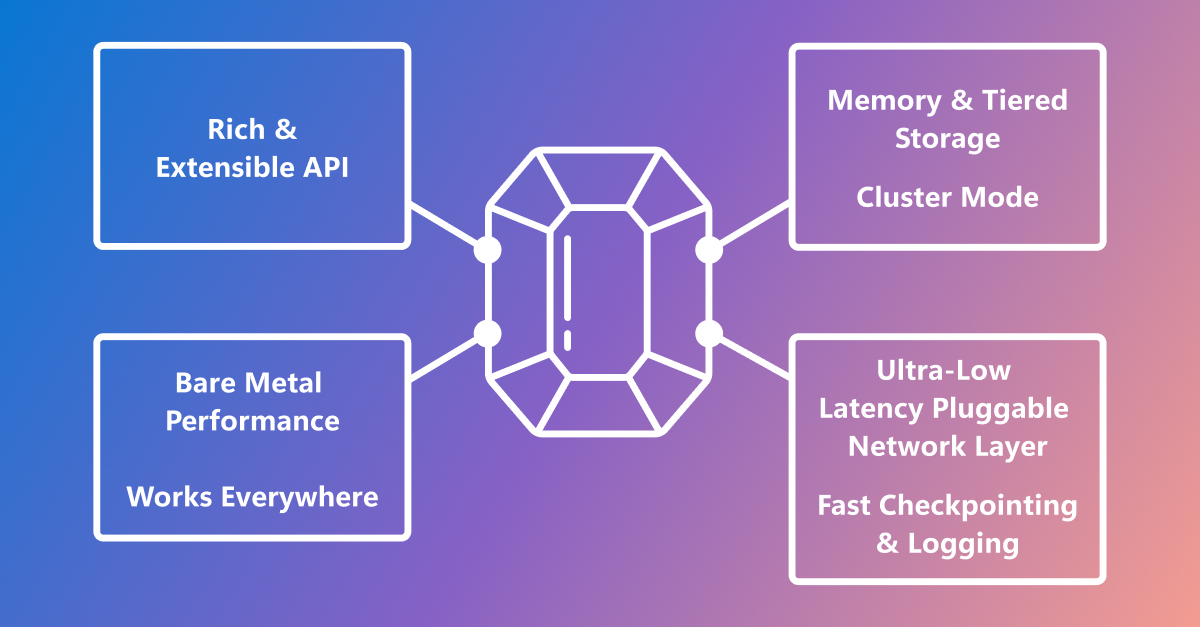
To be fair Microsoft has been working on Garnet for something like 4+ years and have already adopted it internally to reduce infrastructure costs.
Which has been their MO for the last few years. Improve .Net baseline performance, build high performance tools on top of it, dog food them, and then release them under open source licenses.
Yeah that’s mostly what I’m referring to.
Backups are pretty easy, but service availability and failovers across cloud providers is stupid difficult. Not really from a compute standpoint but mostly from a data consistency/transactional standpoint.
However, if you are using vendor specific services like AWS connect then you have to build and maintain multiple deep integrations into those services which effectively doubles your engineering efforts.