Thinking about the chemistry, it seems a lot more reasonable to use chocolate waste as a fat source for making soap.
- 12 Posts
- 462 Comments
Joined 3 years ago
Cake day: June 15th, 2023
You are not logged in. If you use a Fediverse account that is able to follow users, you can follow this user.

 4·1 day ago
Always offering gum and tic taks to everyone.
 1·2 days ago
All of the ports support all three speeds. When you first plug in, there is a quick round of negotiations where both sides basically say “Here are the speeds I can work, what about you?” Then they go with the highest that both support.
That’s that speed the ports are capable of. 10/100/1000 megabits per second. Most things with an Ethernet port nowadays are 10/100/1000 capable, and 2.5Gb is becoming reasonably common.
Weirdly, Roku and other smart TVs are often only 100Mb capable since 4k streaming only requires about 60Mb and if you are squeezing pennies a 1Gb port is a bit more expensive.
10Gb is just starting to get available for high end consumer devices.
My router only has four downstream ports, and due to the layout of my house I only want to run one cable from the router to my home office anyway. If it had enough ports and the house was laid out differently I wouldn’t have bothered with the switch.
Unmanaged switches are usually quite a bit cheaper and just work. You plug everything in and that’s it. Managed switches need configuring and cost more. I paid $25 for my 8 port 10/100/1000 switch, while the managed version is about $120. With a managed switch you can do things like turn individual ports on and off, traffic limit and monitor per port, and other fancy networking things that I’ve never bothered with.
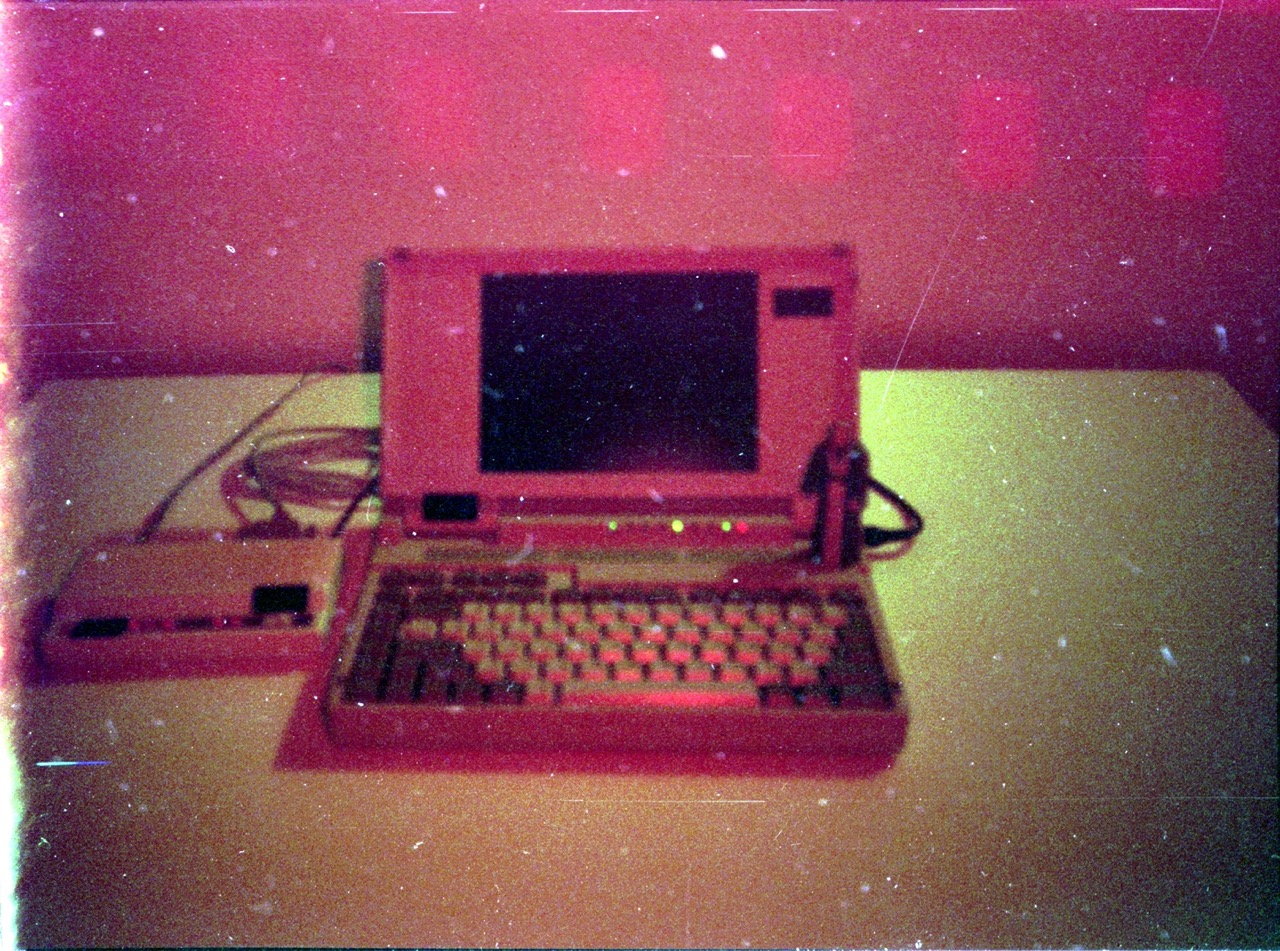 5·3 days ago
BeOS is my favorite desktop OS of all time. Nowadays I run Linux on all my machines, but there are things that it was better and faster at on a Pentium 75 with 16MB of RAM than today’s multi GHz and multi GB systems running Linux, MacOS or Windows. I’m not sure how much of that you will see in a demo like this, as is was more day to day things from back when we cared about local files and applications and weren’t permanently connected to the internet. But still, it was amazing.
In my home state there is a very small town that supposedly was going to be the recipient of a large investment that sank on the Titanic. Or possibly it was just the investors? Either way, the town never got the investment and so remained a very small town. I imagine that there must be a number of such stories of what might have been if the Titanic had made it to dock. Do you know of any?
 2·3 days ago
It’s not so much that I want to keep using it, but I won’t be able to move everyone else over at once so need to be able to keep the sharing working with them. I’ll take a look at CalDav for now. Thanks!
Oof, the email thing is also an issue. I’ve tried just moving to a different email client and all of them have performance issues when dealing with my primary account that I started a month or so after Gmail first launched.
Cryptpad looks great for a lot of things but does not appear to have any interoperability with Google Calendar.
I daily drive Debian on a couple of thirteen year old laptops. This is exactly right and I’m damn happy about it.
I wired my house with cat6 when I moved in. The overall setup looks like 10G fiber to the house -> 2.5G capable router -> 2.5G capable NAS running *arr stack. Also off the router is a single cat6 run downstairs -> 8 port 1G unmanaged switch, which is connected to my desktop, work dock, parters dock, TV, and backhaul run to the back of house wifi extender. The desktop, both docks and wifi extender are 2.5G capable. The TV is 100M. This has been extremely reliable. I plan on upgrading the switch to a 10g capable one at some point, and then the router. Since the switch is unmanaged, is there a good way to know when it is the limiting factor and I should update it?
I run Debian 13 on my 13 year old Thinkpad. It’s perfect for my uses.

I feel this deep in my soul. My kids don’t have tablets or phones and are only allowed to watch things with us there that we approve of. And yet, somehow, my youngest wants to talk about fucking Mikey and JJ videos.

That is the exact opposite of my experience. Of all the coworkers and friends I’ve ever had who worked in cybersecurity, one was a bootlicker, while all of the rest were at least three of transfem, furry, weeb, and anarchist.
Edit: Ok, one of the transfem furry anarchists was a bootlicker, but only in the kink scene, not her politics.
So true. I mostly live in the embedded world but have had to write GUIs from time to time, mostly to connect and send commands to some sort of embedded device.
I always start with a cli version for testing and then write the GUI. A quick wrapper around the comms library and I’m done.
But there are so many annoying fiddly little details in the GUI to deal with that it usually takes as long just to write the GUI as it does the entire rest of the code. Layout, menus, tooltips, icon choices, dealing with screen sizes, DPI, resizing windows, responsive data, etc.
Edit: A simple example that I’ve dealt with many times is reading and writing config data. For the CLI version it’s typically two commands:
‘tool read_cfg’ reads from the device and prints the config to stout
‘tool write_cfg’ reads a config from stdin and sends to the device.
Add a ‘-f’ option to use a file instead of stout for people that don’t remember how to use redirects. Add a couple of documentation sentences to the help command. If there are any issues, print them to stderr and bail. If the user wants to edit the config they can use whatever $EDITOR they prefer.
The same functionality in a GUI means that you have to first implement an editor for values. In my case that was generally a bunch of nested key/value pairs so I could probably find a widget that would work. And then understand how it handles being resized, gets styled, uses tooltips, etc. Of course there would need to be some code to get the data into and out of that widget which would probably need massaging. Then I need to let the user know if there are local edits. And then there is the fact that the data is now in three places, on a local disc, on the device, and in the editor and I need to communicate with the user that there is a difference between loading and saving from disc vs the device. Do I give a warning that loading from once place will overwrite anything they’ve changed in the editor? How do I make the four load/save buttons have obvious icons? And how to handle errors? An annoying pop up? Partially load the data? Something else? So many little things that have to be designed, implemented, and tested.
Oh I agree, I’m not saying that PDF is some sort of document format perfection. But it is a fully open one with a spec that fits in 250 pages, as opposed to docx’s 7500(!!) page spec with undocumented binary blobs mixed in.

I see you too are a person of culture.




I feel that there is a great joke comparing the apparent mental health of people who develop file systems and statistical mechanics, but the narcolepsy is hitting just a bit to hard for me to figure it out right now.