- cross-posted to:
- technology@piefed.social
- cross-posted to:
- technology@piefed.social
You must log in or # to comment.
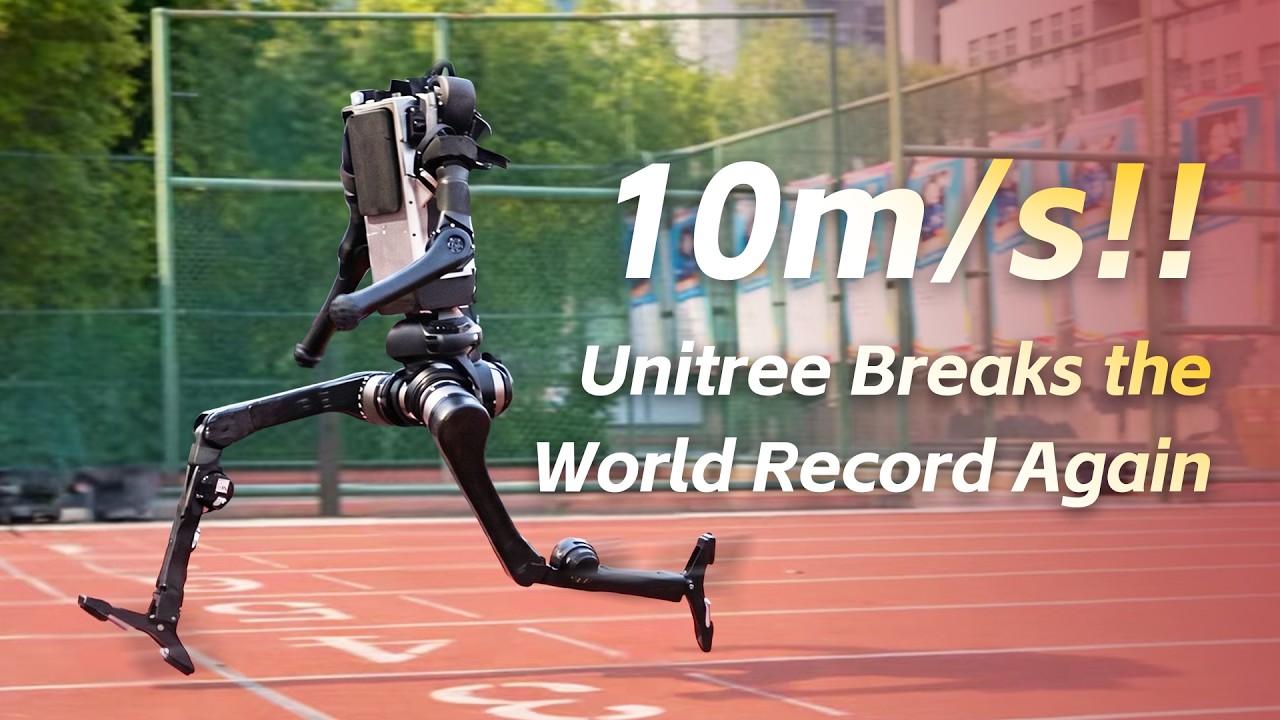
It’s remote operated by the world QWOP champion
Adding a wheel to it will make it move faster
Skates, indeed
“Highly specialized machine does single task faster than humans”. Yes, it did. And?
And that means we have robots that can exercise unprecedented body control in dynamic situations. If you don’t understand the general applications of this, really don’t know what else to say to you.
The problem is that these are under ideal conditions. And I don’t see an application for a running robot that can operate on under ideal conditions. Show me this thing doing the same thing under adverse conditions, and actually having an application (delivery?) and I’ll ne impressed.
I acknowledge that this is a technical feat, and not an easy one. But show me why it matters. Why this is better than a wheeled robot moving at the same speeds.
Running merely illustrates that the system can react with very little latency, it’s obvious that this will be applicable in any applications where the robot needs to quickly adapt to the environment, such as say factory work.
I disagree, but I’m just a mechanical engineer.
And what specifically is it that you disagree with, but I’m just a software engineer.
In à set a planned condition you don’t have the impact of random events. A perfectly fine program can broke easily because input data don’t match expected input. I join the other guy sating that not a huge feat, that a feat but on the same scale of solid state battery or the folding cloth robot. Pretty but not real life usable yet so not so usefull. I get that you like the final idea. I am myself wetting myself about the LG robot which was folding t-shirts at CES2026 but I fold on my bed and I am convinced he can’t handle well a tilted surface which is not as hard as a table.
You absolutely do have the impact of random events when you’re doing anything in the physical world. You have wind, uneven ground, variations in weight distribution, and so on. That’s what makes this sort of stuff so difficult in practice. All the tiny little errors quickly add up, so you can’t just match expected input. You have to have a dynamic system that can adjust on the fly to the sensory data. Dealing with stuff like an uneven bed or a tilted surface is a completely separate problem of having a good enough world model internally.